
Designing healthcare around human energy

Project
Mobile Application
Summary
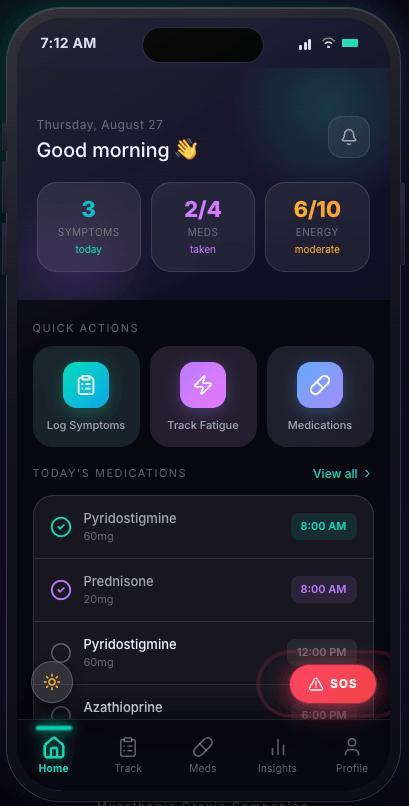
Axiona is a personal digital health project designed to empower people living with Myasthenia Gravis through clarity, accessibility, and greater control over their daily care.
Responsibilities
Senior Product Designer
UX/UI · Product Strategy
Accessibility
Design Systems
Overview
Axiona is a personal product design project created to explore how thoughtful digital experiences can better support people living with Myasthenia Gravis.
It was not developed for a client, employer, or commercial brief. The project was initiated independently as an opportunity to combine healthcare UX, accessibility, inclusive design, product strategy, and emerging AI-assisted design workflows around a meaningful real-world problem.
This gave me the freedom to approach the product from first principles: understanding the user context, defining the experience strategy, establishing accessibility requirements, designing the information architecture, creating the interaction model, and shaping the complete UI system.
The objective was not simply to design an attractive healthcare application.
It was to demonstrate how senior product design thinking can turn a complex and sensitive healthcare challenge into a clear, accessible, and supportive digital experience.
Client: Personal Project
Project: AI-Assisted Product Design
Sector: Health
Date: 2026
The Challenge
Healthcare experiences should work on difficult days too
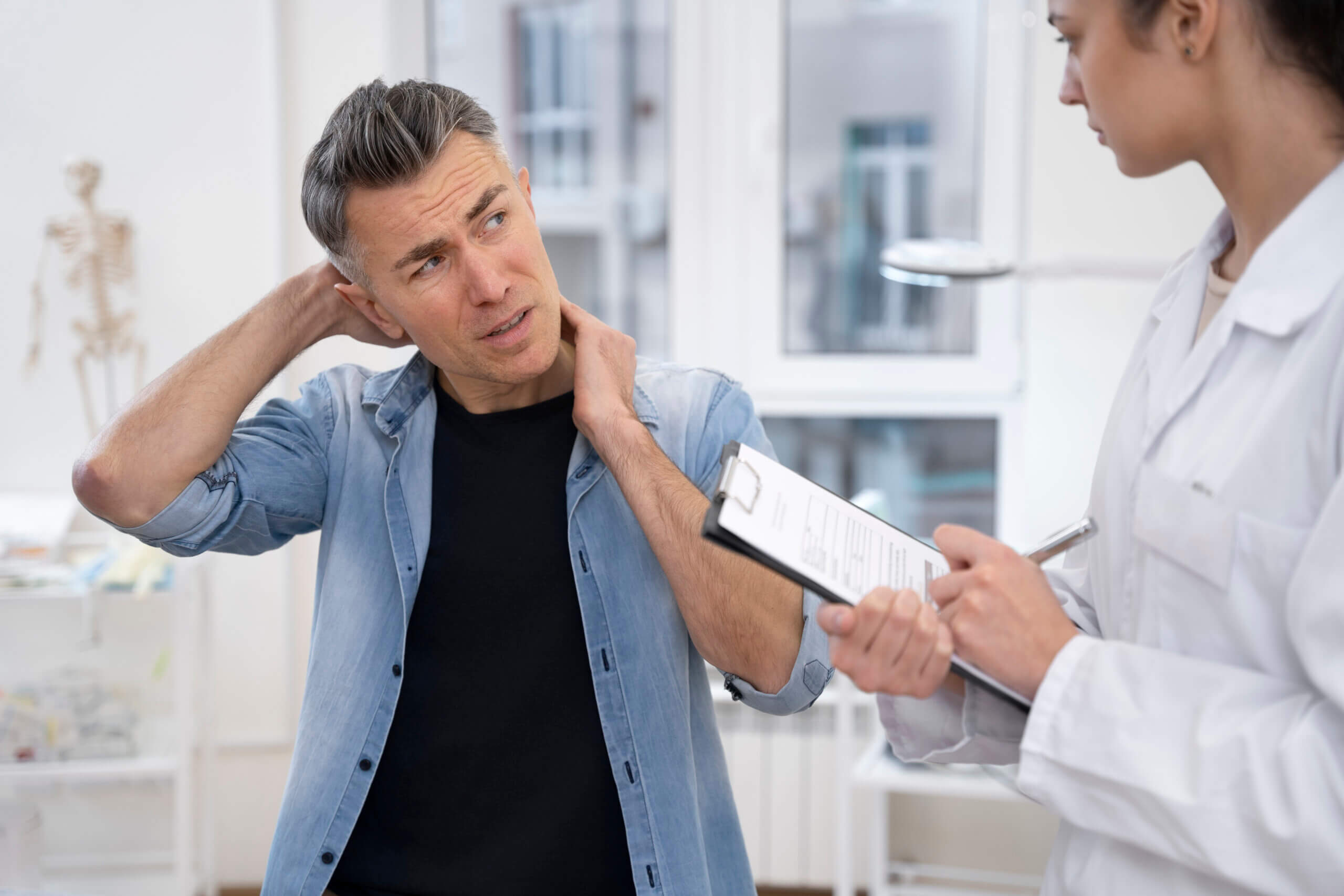
Living with Myasthenia Gravis can involve fluctuating levels of strength, fatigue, vision, speech, and overall energy. That creates a unique product design challenge.
Most digital products assume that a user has the same physical and cognitive capacity every time they open an application.
Axiona starts from the opposite assumption. The experience needed to remain understandable and easy to use even when the person had limited energy available.
The challenge was not simply:
How do I design a healthcare dashboard?
It was:
How can I create a digital health experience that asks as little effort as possible from someone who may already be physically or mentally fatigued?

The Opportunity
Many health applications focus heavily on collecting information.
Axiona focuses on helping the user understand what matters.
The product was designed around a few fundamental needs:
- understand how the day is going
- access important information quickly
- reduce unnecessary interaction
- recognize patterns over time
- support conversations with healthcare professionals
- make healthcare technology feel more human
The goal was to transform health tracking from an administrative task into a supportive everyday experience.
My Approach:
I focused on fatigue-sensitive UX — designing every interaction around the amount of physical and cognitive effort it requires.
Key principles included:
- fewer decisions per screen
- clear primary actions
- accessible touch targets
- predictable navigation
- readable typography
- strong visual hierarchy
- progressive disclosure
- reduced cognitive load
The goal was not just usability.
It was energy conservation through design.
The Experience:
Axiona helps users quickly understand:
How am I doing?
What needs my attention?
What should I do next?
The experience was structured around a simple journey:
Understand → Check In → Track → Recognize Patterns → Share
This keeps the product focused on meaningful daily support instead of overwhelming users with data.
The Results
Accessibility by Design: Accessibility was part of the product strategy from the beginning.
The system considers contrast, typography, interaction size, predictable behavior, cognitive load, hierarchy, and reduced reliance on color alone.
The objective was to create a product that feels calm, clear, and usable — especially on difficult days.
Personal Project + AI: Axiona is an independent personal project, created to explore how senior product design thinking can be combined with AI-assisted workflows.
AI tools such as Figma Make helped accelerate prototyping, iteration, and execution.
But AI did not design the product.
The product strategy, UX architecture, accessibility decisions, information hierarchy, interaction model, and visual system were driven by my experience as a Senior UI/UX and Product Designer.
AI accelerated the execution. Product design expertise directed the outcome.
Want to know about Axiona or want to collaborate?
Click the links below if you are interested in the project and want to learn more about Axiona and how you can be part of this initiative.
Explore Axiona PrototypeWhant to collaborateConclusion
Axiona became a functional product concept with:
- accessible onboarding
- a daily health dashboard
- fatigue-sensitive interaction patterns
- reusable UI components
- a scalable design system
- an interactive prototype
The project reinforced one central idea:
Accessibility should not be added to a product. It should shape what the product becomes.
Credits
Design
Eduardo Calvo – Creative and Art Director
Team
Let's grab a coffee
And Chat!

Copyright © 2025 EduCalvo. All Rights Reserved